
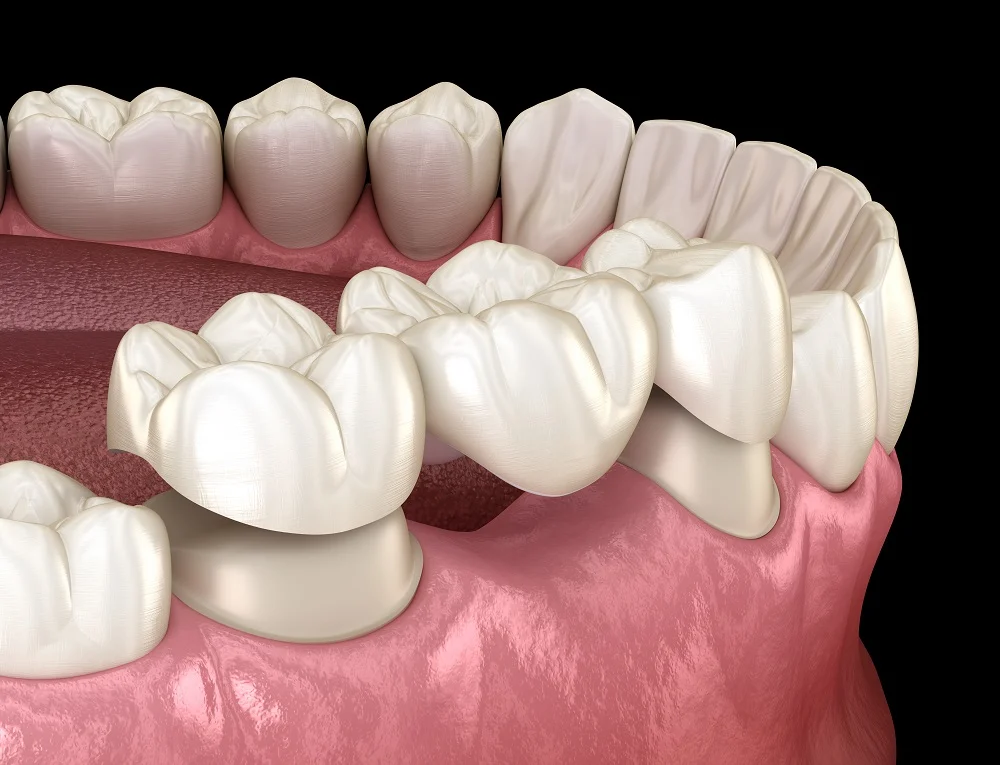
Fill the Gap and Get Your Full Smile Back
A missing tooth changes more than how your smile looks. It also changes how you chew, how your other teeth sit, and how well you can keep the area clean. At Audubon Dental in Spokane, WA, , we use custom dental bridges to replace one or more missing teeth with a restoration that looks natural, feels secure and restores everyday function. At your exam, we’ll check your teeth and gums and tell you whether a bridge is the right choice for you.
Book OnlineWhat Is a Dental Bridge?
A dental bridge is a fixed restoration that “bridges” the space left by a missing tooth. It usually has two parts: crowns that fit over the healthy teeth on either side of the gap, called abutment teeth, and one or more artificial teeth, called pontics, that fill the space between them. The bridge is cemented in place, so you don’t take it out the way you would a removable partial or denture.
Bridges are custom made to match the shape and shade of your surrounding teeth. Once placed, a well-made bridge blends in with your smile, so most people can’t tell which tooth is the replacement.
Why Replacing a Missing Tooth Matters
Leaving a gap open can lead to problems that build slowly over time:
- Neighboring teeth can drift or tip into the empty space, which throws off your bite.
- The opposing tooth can over-erupt toward the gap.
- Exposed gum tissue and shifted teeth can trap food and plaque, raising your risk of decay and gum disease.
- Chewing on one side puts extra stress on your remaining teeth and jaw.
- Gaps can affect your speech and make you less confident when you smile.
A bridge closes the space, keeps your other teeth where they belong and spreads chewing forces more evenly.
Types of Dental Bridges
The right design depends on where the gap is, the health of the nearby teeth and your goals:
- Traditional bridges use crowns on the teeth on both sides of the gap. This is the most common design and works well when those teeth are strong or already need crowns.
- Cantilever bridges attach to a tooth on only one side of the gap. They’re used in select situations where only one neighboring tooth is available.
- Bonded (Maryland) bridges use a thin framework bonded to the backs of the neighboring teeth. They need less reshaping and are often used for front teeth.
- Implant-supported bridges are anchored to dental implants instead of natural teeth, which leaves your healthy teeth untouched. Learn more about implant-supported bridges.
Not sure whether a bridge or an implant is the better fit? Our guide to implants vs. bridges walks through the differences.
What to Expect During Treatment
A traditional bridge usually takes two visits. At the first appointment, we numb the area, gently reshape the abutment teeth so the crowns can fit over them, and take impressions of your teeth. You’ll leave with a temporary bridge that protects the prepared teeth and fills the gap.
At your second visit, we remove the temporary, check the fit, bite and color of your new bridge, make any adjustments, and cement it in place. Most patients go back to normal eating within a day or two, starting with softer foods while they get used to the new restoration.
Caring for Your Bridge
With good care, a dental bridge can last many years. Brush twice a day and clean under the pontic every day with a floss threader, water flosser or interdental brush, since plaque can collect where the bridge meets the gum. Try not to chew ice or hard objects, and keep up with regular checkups and cleanings so we can check the bridge and the teeth that support it.
Dental Bridge FAQs
How long does a dental bridge last?
Many bridges last 10 to 15 years or longer. How long yours lasts depends on your oral hygiene, the health of the supporting teeth and gums, and habits like grinding or chewing hard objects. Regular checkups help us spot problems early.
Does getting a bridge hurt?
No. We numb the area before preparing the supporting teeth, so you should feel pressure but not pain. Some mild sensitivity or gum tenderness for a few days afterward is normal and usually eases with over-the-counter pain relievers.
Will my bridge look natural?
Yes. Each bridge is custom made to match the size, shape and shade of your surrounding teeth, so it blends in with the rest of your smile.
Is a bridge or a dental implant better for me?
It depends on your situation. A bridge is often quicker and doesn’t require surgery, while an implant replaces the tooth root and doesn’t rely on the neighboring teeth. We’ll go over the pros and cons of each during your exam.
How do I clean under a dental bridge?
Brush as usual and clean under the artificial tooth every day with a floss threader, super floss, a water flosser or an interdental brush. This removes plaque and food that can collect where the bridge meets your gums.
Can I eat normally with a bridge?
Yes. After a short adjustment period, most patients eat their usual foods. Start with softer foods for the first day or two, and avoid chewing ice, hard candy or other very hard items that could damage the bridge.
Is a dental bridge covered by insurance?
Many dental plans cover part of the cost of a bridge when it replaces a missing tooth. Our team will review your benefits and explain your out-of-pocket costs before treatment begins.
Ready to Close the Gap in Your Smile?
If you’re missing one or more teeth, a custom bridge can restore your bite, protect your oral health and give you back a confident smile. Call Audubon Dental at (509) 325-4227 or request an appointment online to find out if a dental bridge is right for you.