
Rebuild a Strong Foundation for Your Future Smile
After a tooth is lost, the jawbone that once supported it slowly begins to shrink. Over time, there may not be enough healthy bone left to hold a dental implant securely. At Audubon Dental in Spokane, WA, , bone grafting restores the volume and density your jaw needs, so you can move forward with a stable, long-lasting tooth replacement.
Book OnlineWhy Bone Loss Happens After Tooth Loss
Your natural tooth roots stimulate the jawbone every time you bite and chew. That stimulation signals your body to keep the bone healthy. When a tooth is missing, whether from decay, gum disease, injury or an extraction, the bone in that area no longer receives those signals and gradually starts to break down.
Bone loss can begin within months of losing a tooth and continues over time. Beyond making implant placement difficult, it can cause neighboring teeth to shift, change the shape of your face and make dentures fit poorly. A bone graft adds new bone material to the area so your body can regenerate the support it has lost.
Who May Need a Bone Graft
We may recommend bone grafting if you:
- Plan to get dental implants but don’t have enough jawbone to support them
- Have had a tooth missing for an extended period
- Have lost bone due to advanced gum disease
- Experienced trauma or injury to the jaw
- Need additional bone support for a bridge, denture or other restoration
Types of Bone Grafts
Several types of graft material can be used, and we’ll recommend the option that best fits your needs and treatment goals.
Autogenous grafts use bone taken from another area of your own body, often from inside the mouth, such as the chin. Because the bone is your own and contains living cells, it integrates well with your existing jawbone. The tradeoff is that it requires a second site to harvest the bone.
Allografts use human donor bone from a tissue bank. This material is carefully screened, tested and processed before use to ensure safety.
Xenografts use bone from an animal source, most commonly bovine (cow) bone. The material is specially processed so it acts as a scaffold that your own bone grows into over time.
Allografts and xenografts are widely available and don’t require a second surgical site, which can make the procedure simpler and recovery more comfortable for many patients.
What to Expect During the Procedure
Before we begin, we numb the treatment area with local anesthesia so you stay comfortable. If you feel anxious about dental work, ask us about sedation options to help you relax.
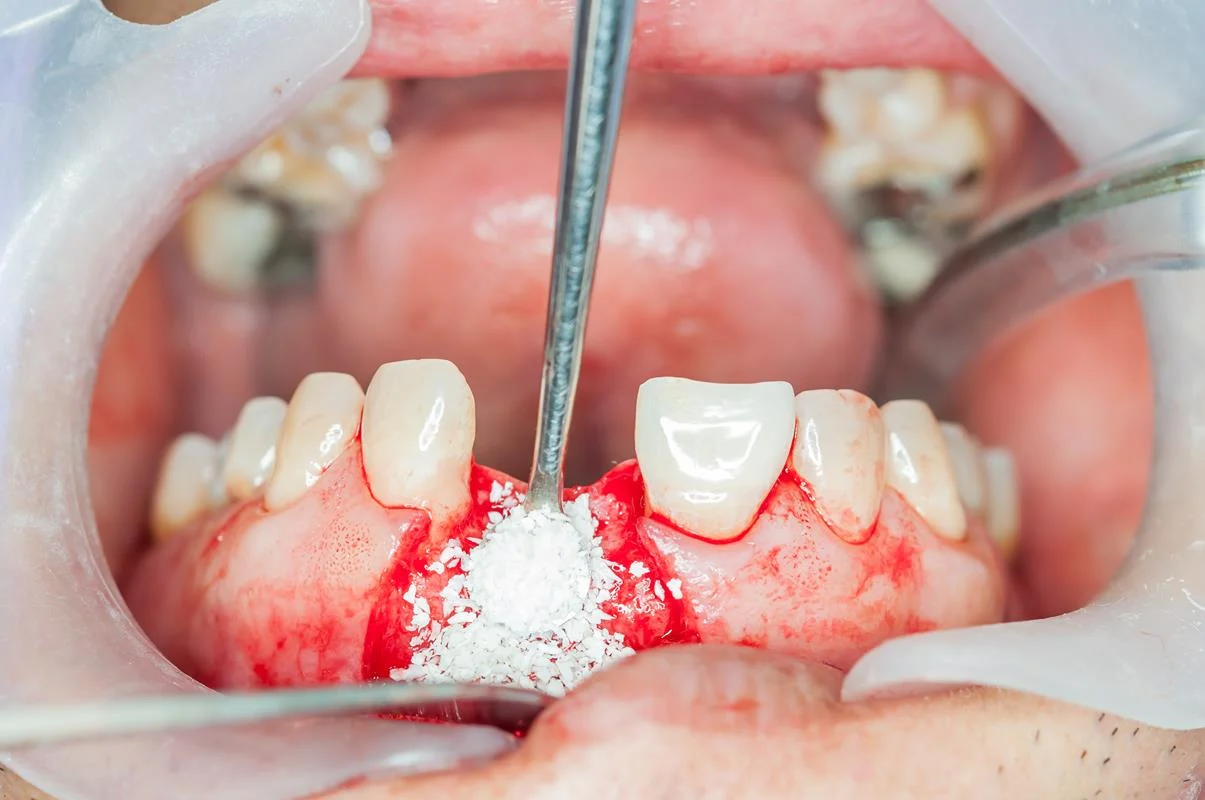
Your dentist makes a small incision in the gum tissue to expose the bone and evaluate exactly how much grafting material is needed. If your own bone is being used, it is carefully harvested from the donor site, which is then closed with stitches. The graft material is placed where it’s needed, and in some cases a block of bone is secured to the jaw with small titanium screws. A protective membrane or additional grafting material may also be used to support healing. The gum tissue is then stitched closed.
Bone grafts are frequently placed at the time of a tooth extraction to help prevent bone loss before it starts. Learn more about this approach on our socket preservation page.
Recovery and Healing
After your procedure, you’ll go home with detailed aftercare instructions. Depending on your needs, we may prescribe antibiotics and pain medication. Some swelling and tenderness are normal for the first few days. Stick to soft foods such as pasta, yogurt, eggs and gelatin while your mouth heals, and avoid chewing directly on the graft site.
Over the following months, your body gradually replaces the graft material with new, healthy bone. Full healing typically takes several months, often between four and nine, depending on the size of the graft and how your body responds. Once the area has healed and the bone has matured, we can place your dental implants.
Bone Grafting FAQs
Is a bone graft painful?
The procedure is performed under local anesthesia, so you shouldn’t feel pain during treatment. Afterward, mild soreness and swelling are common for a few days and are usually well managed with prescribed or over-the-counter pain relievers. Sedation is also available for patients who feel nervous.
How long does it take to heal from a bone graft?
Initial healing of the gums takes about one to two weeks. The bone itself takes longer to mature, usually several months, often four to nine, before the area is strong enough to support a dental implant.
Do I always need a bone graft before getting dental implants?
No. Many patients have enough healthy jawbone to receive implants without grafting. During your consultation, we use advanced imaging to measure your bone and determine whether a graft is needed.
Where does the bone for a graft come from?
Graft material can come from your own body (autogenous), from a screened human donor (allograft) or from a processed animal source such as bovine bone (xenograft). We’ll explain which option is best for your situation.
Is donor or animal bone safe to use?
Yes. Donor and animal graft materials are rigorously screened, tested and processed before use. They act as a framework that your body gradually replaces with your own natural bone.
What can I eat after a bone graft?
Stick to soft, cool or lukewarm foods such as yogurt, smoothies eaten with a spoon, pasta, mashed potatoes, eggs and gelatin. Avoid hard, crunchy or very hot foods, and don’t chew on the graft site until your dentist says it’s okay.
Can a bone graft be done at the same time as a tooth extraction?
Often, yes. Placing graft material right after an extraction helps preserve the bone in the empty socket and can make future implant placement easier.
Take the First Step Toward a Complete Smile
Don’t let bone loss stand between you and the confident, secure smile you want. The team at Audubon Dental will evaluate your jawbone, explain your options and create a plan that prepares you for successful implant treatment. Call (509) 325-4227 or request an appointment online today.